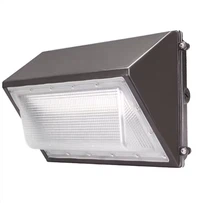
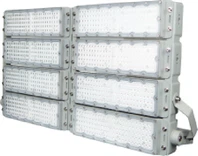
Key issues of LED street lamp housing in various environments
1. The temperature change of the thermal shock may cause the failure of the LED device
After the LED chip is packaged, it is a solid-state device, and there is a mismatch in the expansion coefficient between the chip, silica gel (or resin), metal bracket and leads. In the process of temperature change, the expansion and contraction of silica gel are intensified, and the internal stress of the device is too large, which will lead to the increase of the displacement of the bonding point of the LED wire, and the premature fatigue and damage of the wire. At the same time, the solder joints with poor bonding state may be de-soldered, resulting in the phenomenon of de-soldering of the solder balls and the chip electrodes, and even the failure phenomenon of delamination and peeling of the LED chip.
There are hundreds of LED devices used in an LED street light shell, usually in a series-based hybrid configuration. If one LED fails, it will cause multiple LEDs to fail together. Therefore, it is used in cold areas. The LED street lamp housing must first set reasonable packaging process parameters such as ultrasonic power, bonding pressure, bonding time and bonding temperature according to the temperature change characteristics of the lamp in a specific use environment to ensure that each LED device operates in a low temperature environment. reliability.
2. Reliability guarantee for low temperature operation of LED drive device
Another key technical challenge is the reliability of the LED street lamp housing drive device in a low temperature operating environment. At present, most of the LED street lamp housing drive power shows different types of acclimatization phenomena in the cold and low temperature environment. The more prominent characteristics are that the low temperature cannot be started normally and the failure rate is high in the long-term low temperature operating environment. The main reason for the above problems is that the device selection of the driving power supply in the design stage does not consider the reliability of the low-temperature working state, and the characteristics of some key components in the low-temperature environment change, resulting in the drive device not being able to start or operate normally at low temperature, causing failures. The specific reasons mainly include the following four aspects:
, the density and activity of the carrier of the switch tube will be reduced at low temperature, and the starting point of overload protection will be reduced accordingly; second, the electrolytic capacitor electrolyte will freeze at low temperature and lose the capacitive effect (the ions in the solution only exist at this time. ion polarization), no load capacity; third, some types of optocoupler devices cannot work normally at low temperature; fourth, the thermistor at the input end to prevent surge current, the resistance value increases at low temperature (yes 3 to 5 times the normal temperature), it will also cause the low temperature to fail to start normally.
The solution to the above problems is to start with selecting devices with better temperature characteristics. For example, not all electrolytic capacitors cannot work at low temperature. Generally speaking, electrolytic capacitors above 200V have poor low temperature resistance, while electrolytic capacitors below 160V can basically work normally in an environment of minus 40 degree , as long as two The use of low-voltage electrolysis in series can solve the problem. The adjustment of device selection may slightly increase the cost of the driving device, but it is negligible from the overall cost of the LED street light housing. Considering the factors of improving reliability and reducing maintenance costs, this design adjustment is very necessary and cost-effective .
3. Protective measures against ice condensation hazards on LED street light shells
A problem that is easily overlooked in the promotion and application of street lamps in cold areas is the accumulation of ice and snow on the surface of the lamps, and the ice formed after being melted by heat. Once the ice is formed, it will cause great safety hazards to vehicles and pedestrians. Especially the LED street lamp shell, because the lamp shell is generally made of aluminum, the aluminum oxide on the surface is a hydrophilic material, which is more likely to cause ice condensation. In 2008, a large-scale snow disaster in southern my country caused a large amount of ice to condense on the high-voltage wires on the aluminum surface, which collapsed and damaged a large number of power facilities. This disaster is not only caused by the weather, but also the high-voltage cable on the alumina surface is a hydrophilic material, which is also an important incentive. Since it affects the safety of road traffic, preventing ice condensation is a safety measure that must be taken into account when applying LED street light housings in cold areas.
Benwei Lighting is an LED Tube, LED flood light, LED Panel Light, LED High Bay, LED manufacturer with 12 years of experience. If you want to purchase a high-quality LED flood light or have a more in-depth understanding of the application of LED flood lights, please contact send us inquiry, our web:  https://www.benweilight.com/.